
With electricity prices increasing every year and India moving towards clean and renewable energy, more homeowners are considering rooftop solar systems. However, one question almost everyone asks before installing solar panels is:
“Can I get a government subsidy for solar panels?”
The answer is Yes.
The Government of India encourages homeowners to adopt renewable energy by offering financial assistance through various rooftop solar subsidy programs. These initiatives help reduce the upfront cost of installing a residential solar system, making clean energy more affordable for families across the country.
In this comprehensive guide, we’ll explain everything you need to know about Solar Subsidy in India, including eligibility, benefits, application process, required documents, and frequently asked questions.
Table of Contents
What is Solar Subsidy in India?
A solar subsidy is financial assistance provided by the Government of India to encourage homeowners to install rooftop solar systems.
Instead of paying the full installation cost yourself, eligible homeowners receive government support that helps reduce the total investment.
The subsidy aims to:
- Increase renewable energy adoption
- Reduce electricity consumption from conventional sources
- Lower carbon emissions
- Make solar power affordable for Indian households
For residential users, this makes switching to solar a much more attractive investment.
Why is the Government Promoting Solar Energy?
India has set ambitious renewable energy goals to reduce dependence on fossil fuels and promote sustainable development.
Solar energy offers several national benefits:
- Reduced pollution
- Lower greenhouse gas emissions
- Increased energy security
- Reduced pressure on electricity grids
- Lower electricity expenses for homeowners
Government subsidy programs are designed to accelerate the adoption of rooftop solar systems across the country.
PM Surya Ghar Muft Bijli Yojana
One of the most significant government initiatives supporting residential solar adoption is the PM Surya Ghar Muft Bijli Yojana.
The scheme aims to encourage millions of households to install rooftop solar systems and generate clean electricity.
Its objectives include:
- Supporting residential rooftop solar installations
- Reducing monthly electricity bills
- Promoting renewable energy
- Encouraging energy independence
- Creating a cleaner environment
Homeowners interested in solar should check the latest official scheme guidelines before applying, as eligibility criteria and subsidy amounts may change over time.
Who is Eligible for Solar Subsidy?
Generally, rooftop solar subsidies are intended for residential consumers.
Eligibility may depend on factors such as:
- Residential property ownership
- Grid-connected electricity connection
- Installation through approved vendors
- Compliance with government guidelines
- Completion of required documentation
Commercial and industrial solar projects are typically governed by different policies and incentives.
Always verify the latest eligibility requirements before beginning your installation.
Benefits of Solar Subsidy
1. Lower Initial Investment
One of the biggest advantages of the subsidy is reducing the upfront cost of installing rooftop solar panels.
This makes solar energy more affordable for middle-class families and first-time homeowners.
2. Faster Return on Investment
Since your initial investment is lower, the time required to recover installation costs through electricity savings becomes shorter.
Homeowners begin experiencing financial benefits much sooner.
3. Reduced Electricity Bills
A rooftop solar system generates electricity during the day, reducing your dependence on grid power.
This leads to lower monthly electricity bills and long-term savings.
4. Increase Property Value
Homes equipped with solar systems are increasingly attractive to buyers who value lower operating costs and sustainable living.
Installing solar can add long-term value to your property.
5. Support a Greener Future
Choosing solar energy reduces carbon emissions and supports India’s transition toward renewable energy.
Every rooftop installation contributes to a cleaner environment.
Documents Required
Although requirements may vary, homeowners are commonly asked to provide:
- Aadhaar Card
- PAN Card
- Electricity Bill
- Property Ownership Proof
- Bank Account Details
- Passport-size Photograph
- Mobile Number
- Email Address
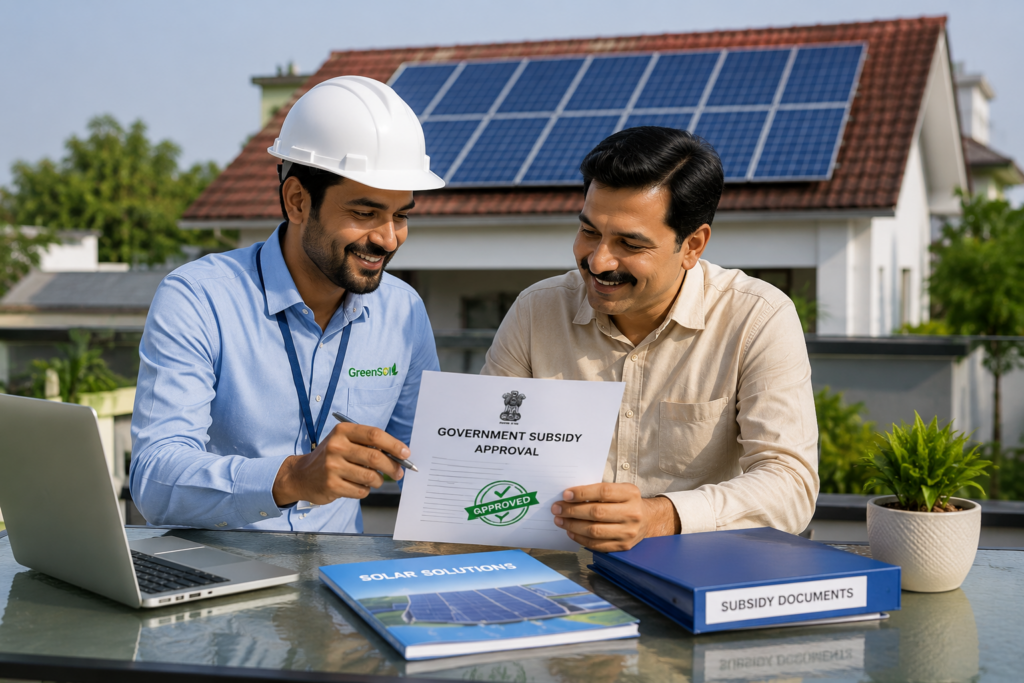
Your solar installer can usually assist with document verification and the application process.
How to Apply for Solar Subsidy
The application process generally includes the following steps:
Step 1
Assess your home’s suitability for rooftop solar.
Step 2
Choose an approved solar installation company.
Step 3
Complete the necessary documentation.
Step 4
Submit your application through the appropriate government portal, if required under the current scheme.
Step 5
Complete system installation and inspection according to the applicable guidelines.
Step 6
Receive subsidy benefits after successful verification, subject to the current program rules.
Because procedures may evolve, always refer to the latest official government instructions.
Why Choose a Professional Solar Installer?
Although homeowners can research the subsidy process independently, working with an experienced installer offers several advantages:
- Professional site inspection
- Proper system sizing
- Quality solar equipment
- Assistance with documentation
- Guidance on subsidy eligibility
- Safe and certified installation
- Ongoing technical support
Choosing a trusted installer reduces paperwork errors and helps ensure a smoother installation experience.
Common Mistakes to Avoid
Many homeowners delay or complicate their solar journey because of avoidable mistakes.
Some common examples include:
- Choosing installers based only on the lowest price
- Ignoring product warranties
- Using poor-quality solar components
- Failing to verify eligibility requirements
- Not understanding net metering policies
- Skipping professional site inspections
Research carefully before making your investment.
Frequently Asked Questions
Is the solar subsidy available for every home?
Solar subsidies are generally available for eligible residential rooftop installations that meet current government guidelines.
Can commercial buildings receive the same subsidy?
Residential subsidy programs are different from policies applicable to commercial and industrial installations.
Can my installer help with the application?
Many experienced solar companies assist customers with documentation and the subsidy application process.
Does the subsidy reduce electricity bills?
The subsidy lowers the initial installation cost. Your reduced electricity bills come from generating your own solar power after installation.
How long do solar panels last?
High-quality solar panels generally have a lifespan of 25 years or more while requiring minimal maintenance.
Final Thoughts
The Solar Subsidy in India has made rooftop solar more accessible than ever before. By reducing installation costs and encouraging renewable energy adoption, government initiatives are helping homeowners invest in clean, reliable, and affordable electricity.
If you’re planning to install solar panels, it’s important to understand the latest eligibility criteria, documentation requirements, and application process. Partnering with an experienced solar installer can also simplify the journey and ensure your system is installed safely and efficiently.
With the right guidance, switching to solar can be one of the smartest long-term investments for your home, your finances, and the environment.
Ready to Install Rooftop Solar?
At GreenSol, we help homeowners make the transition to solar with:
- ✅ Free Site Inspection
- ✅ Residential Rooftop Solar Solutions
- ✅ Government Subsidy Assistance
- ✅ Professional Installation
- ✅ Reliable After-Sales Support
Contact GreenSol today to explore the right solar solution for your home and get expert guidance on the latest government subsidy process.